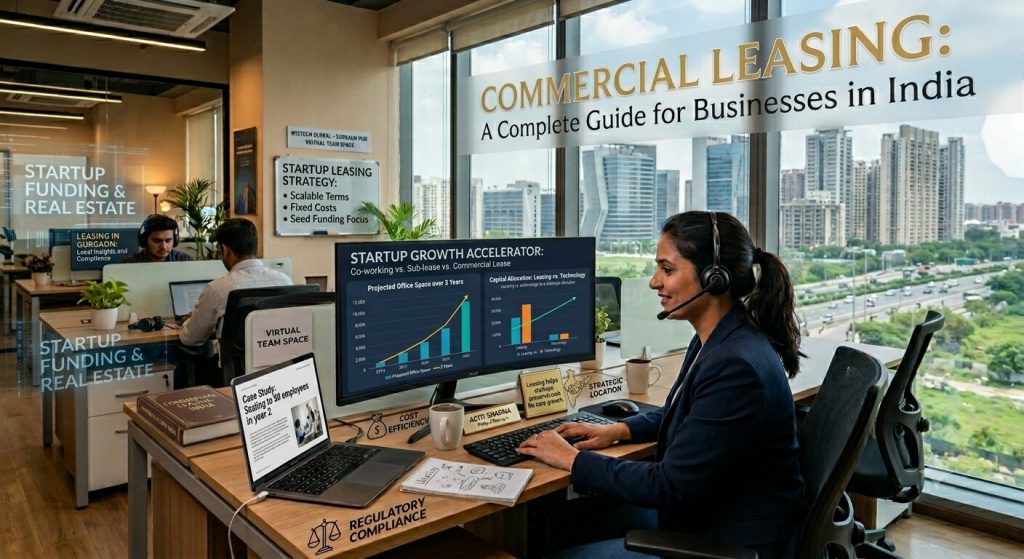
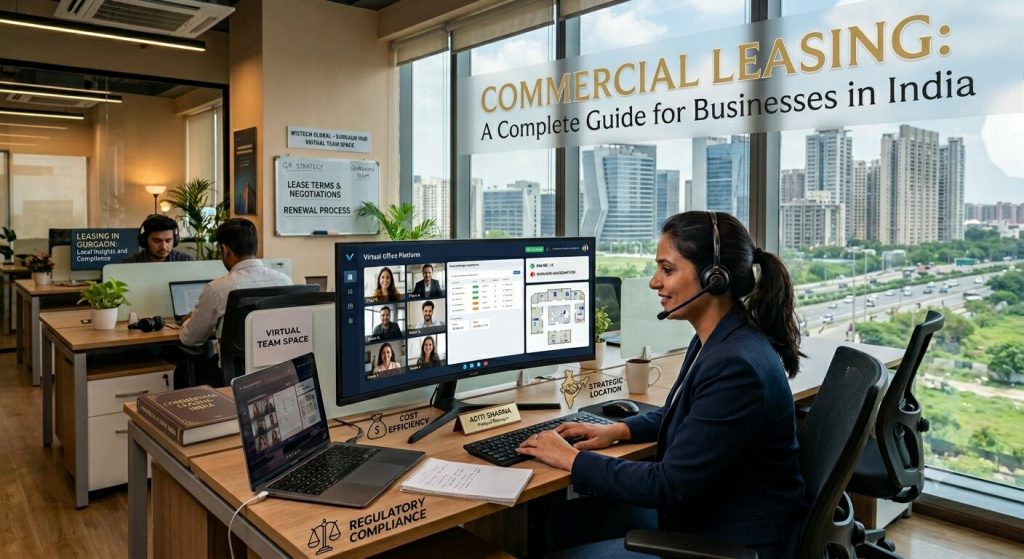
As businesses expand, choosing the right workspace becomes a critical decision. Commercial leasing offers companies the flexibility to occupy office spaces, retail outlets, warehouses, and industrial properties without the large capital investment required for purchasing real estate.
What is Commercial Leasing?
Commercial leasing is an agreement between a property owner (lessor) and a business tenant (lessee) that grants the tenant the right to use a commercial property for a specified period in exchange for rent.
Commercial properties may include:
- Office spaces
- Retail shops
- Coworking offices
- Warehouses
- Industrial units
- Business centers
Benefits of Commercial Leasing
1. Lower Initial Investment
Businesses can preserve capital by leasing instead of purchasing commercial property.
2. Flexibility for Growth
Companies can relocate, expand, or downsize based on changing business needs.
3. Prime Business Locations
Leasing enables businesses to establish a presence in premium commercial districts that may otherwise be unaffordable to purchase.
4. Reduced Maintenance Burden
Many lease agreements place structural maintenance responsibilities on the property owner.
5. Tax Advantages
Lease payments are generally treated as business expenses and may provide tax benefits.
Types of Commercial Leases
Gross Lease
The tenant pays a fixed rent while the landlord covers property taxes, maintenance, and insurance.
Net Lease
The tenant pays rent plus some or all operating expenses.
Modified Gross Lease
Operating expenses are shared between the landlord and tenant.
Percentage Lease
Common in retail properties where rent includes a percentage of business revenue.
Factors to Consider Before Signing
- Location accessibility
- Lease tenure
- Security deposit requirements
- Lock-in period
- Rent escalation clauses
- Maintenance charges
- Parking availability
- Renewal options
- Exit conditions
Why Commercial Leasing is Growing in India
The rapid growth of startups, SMEs, IT companies, and flexible workspaces has significantly increased demand for leased commercial properties across major cities. Businesses increasingly prefer leasing due to lower risk and greater operational flexibility.
Conclusion
Commercial leasing provides businesses with an efficient and cost-effective way to establish operations in strategic locations. Before signing a lease, companies should carefully review all terms and seek professional guidance to ensure the agreement aligns with their long-term business goals.